

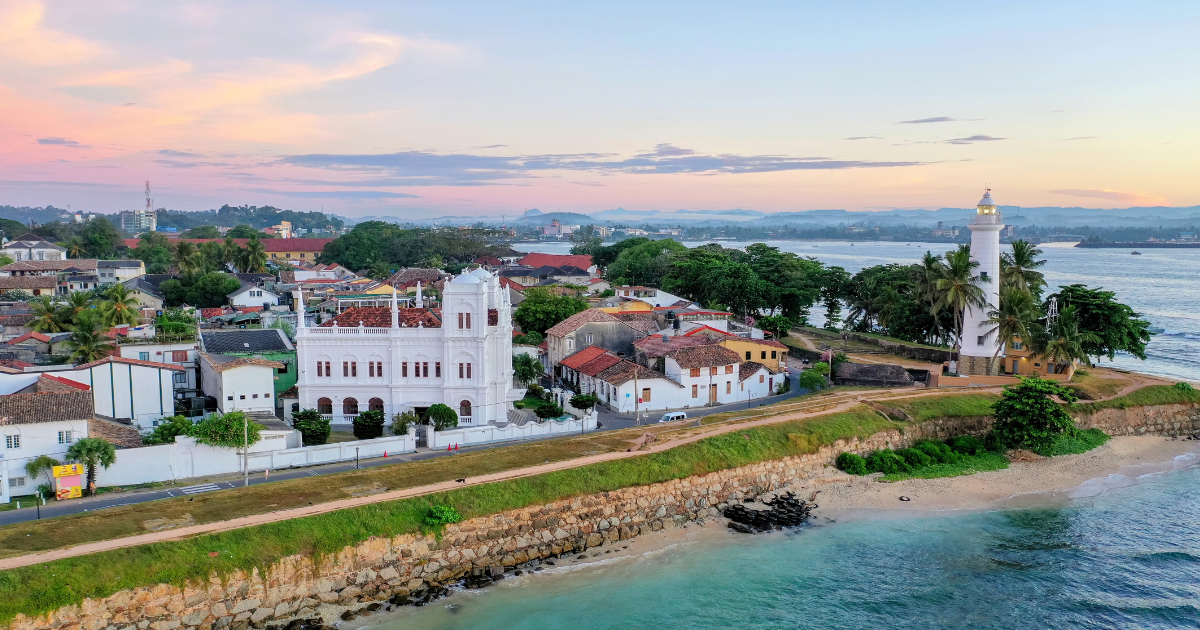
Galle Fort is one of Sri Lanka’s most distinctive heritage destinations, where centuries of European colonial history meet South Asian architecture, coastal scenery, independent boutiques, galleries, restaurants, and elegant restored buildings. Built on a rocky peninsula overlooking the Indian Ocean, the fortified old town remains a living part of Galle rather than a preserved monument frozen in time. The fort was founded by the Portuguese in the 16th century and substantially developed by the Dutch during the 17th and 18th centuries. British administration later left its own mark on the town. In 1988, the Old Town of Galle and its Fortifications were inscribed as a UNESCO World Heritage Site for its exceptional combination of European planning and South Asian architectural traditions. For you as a visitor, the appeal lies in walking through the old streets, following the ocean-facing ramparts, stepping inside historic buildings, and seeing how this remarkable fortified town continues to function as a residential and commercial quarter. Walk the Galle Fort Ramparts The ramparts are the best place to begin exploring Galle Fort. They extend around the rocky peninsula, separating the historic town from the Indian Ocean and harbour. The fortifications were developed over several periods, with the Dutch significantly strengthening the existing Portuguese defenses. UNESCO records the fort’s system of bastions and walls as an important example of European fortification engineering adapted to the geography of South Asia. Start near the Galle Lighthouse and follow the walls along the ocean side. The route takes you past several historic bastions and provides uninterrupted views across the Indian Ocean. In the late afternoon, the western ramparts are particularly attractive as the light softens over the water. The walk is relatively easy, but there are uneven sections and exposed areas, so comfortable footwear is useful. See the Galle Lighthouse Standing on the southeastern edge of the fort, the Galle Lighthouse is one of the city’s most recognizable landmarks. The present lighthouse dates from the 20th century, replacing an earlier British lighthouse that was destroyed by fire in 1934. Its position on the ramparts makes it an especially photogenic part of the fort, with the white tower contrasting against the old stone walls and tropical vegetation. Walk around the surrounding ramparts rather than viewing the lighthouse in isolation. The combination of the tower, ocean, fortifications, and nearby streets gives you a better understanding of how the old city occupies its narrow coastal peninsula. Explore the Dutch Reformed Church The Dutch Reformed Church, also known as Groote Kerk, is one of the most important historic buildings inside Galle Fort. The present church dates primarily to the 18th century and reflects the Dutch period when Galle was an important administrative and commercial center. Its restrained exterior contrasts with the more elaborate religious architecture found elsewhere in Asia. Inside, historic gravestones and memorials provide a direct connection to the colonial population that once lived and worked within the fort. The church is particularly valuable as part of the wider architectural story of Galle because it remains within an intact historic street network rather than standing as an isolated monument. Walk Through the Old Streets One of the best things to do in Galle Fort is simply to walk without following a strict route. The streets preserve the old urban layout, with narrow lanes lined by historic houses, verandas, courtyards, shops, restaurants, churches, and former administrative buildings. UNESCO specifically identifies the street grid, narrow street houses, shaded verandas, and internal courtyards as important characteristics of the World Heritage property. Look beyond the most photographed streets. Some of the most interesting architectural details are found in quieter lanes, where you can see timber doors, high walls, tiled roofs, old ventilation features, and shaded verandas incorporated into buildings that remain part of everyday life. This is one of the defining characteristics of Galle Fort: it is still a functioning town. Discover the Historic Dutch Architecture Galle Fort’s architecture is not purely European. Its significance comes from the way European planning and construction were adapted to Sri Lanka’s climate, materials, craftsmanship, and established building traditions. Many historic houses feature internal courtyards, deep verandas, high ceilings, and shaded openings designed for ventilation. Coral and granite were used extensively in the fortifications, while local building traditions influenced the residential architecture. As you explore, notice how different buildings respond to the tropical climate. The architecture is not simply decorative. Courtyards, shaded passages, thick walls, and ventilation were practical responses to heat and humidity. For travelers interested in architecture, a private heritage walk with a knowledgeable guide can reveal details that are easy to miss when exploring independently. Visit the National Maritime Archaeology Museum Galle’s location has always been closely connected to maritime trade, and the National Maritime Archaeology Museum provides context for that history. The museum occupies a historic Dutch building within the fort and focuses on Sri Lanka’s maritime archaeological heritage. Its collections include material connected with maritime trade, shipwrecks, navigation, and the country’s long relationship with the Indian Ocean. The museum adds useful context to what you see outside. The fort was not simply a military installation. Galle developed as a strategic port connected to commercial routes across the Indian Ocean, linking Sri Lanka with wider Asian, European, and Middle Eastern trading networks. See the Old Gate and Maritime Gateway The Old Gate provides another insight into Galle’s colonial history. Located on the harbor side of the fort, it formed part of the original access system and carries the VOC emblem associated with the Dutch East India Company. The more substantial Main Gate on the northern side was developed later and remains one of the principal entrances into the old town. Walking between these entrances gives you a sense of how the fort operated as a controlled urban and commercial center. The defensive walls were designed around the peninsula’s natural geography rather than imposing a perfectly geometric European fortress plan. UNESCO specifically identifies this adaptation to the site’s rocky terrain as an important part of Galle’s architectural significance. … Top Things to Do in Galle Fort, Sri Lanka for a Luxury Heritage Escape