

Sigiriya Rock: A Complete Guide to Visiting Sri Lanka’s Iconic Fortress
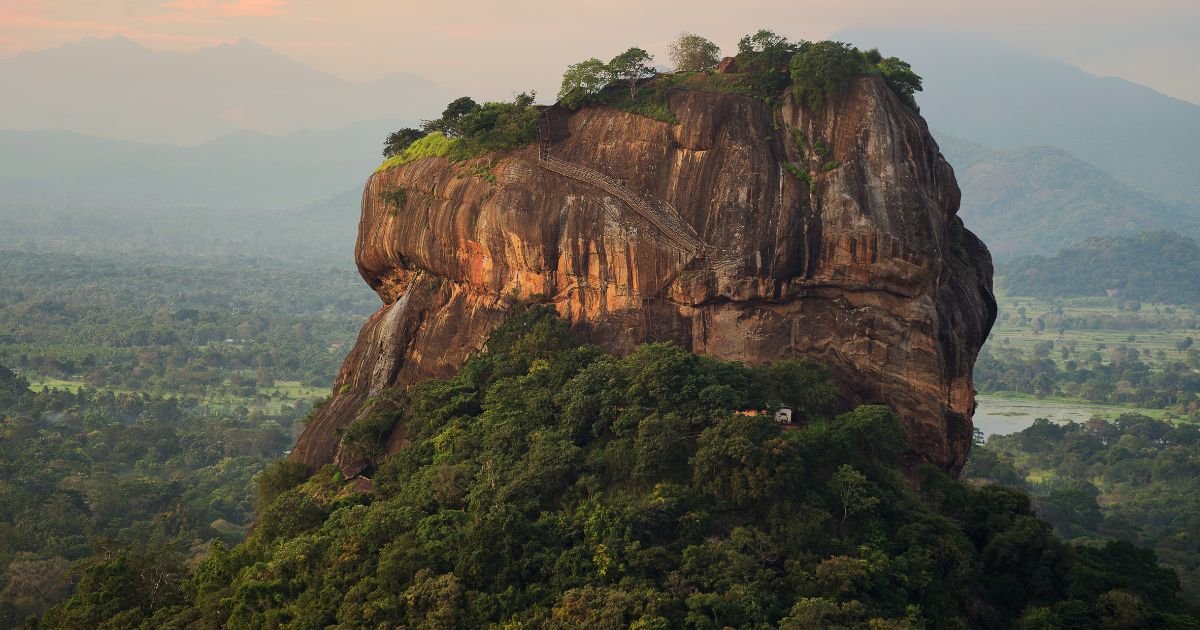
The first glimpse of Sigiriya is one you’re unlikely to forget. Rising almost 200 meters above the surrounding forest, this extraordinary rock rises from the landscape at the heart of Sri Lanka’s Cultural Triangle.
The approach is part of the experience. You’ll wander through landscaped gardens and among enormous natural boulders before climbing towards the famous frescoes, Mirror Wall and Lion’s Paws. At the summit, the remains of the ancient palace sit above sweeping views of forests, plains and distant reservoirs.
There are around 1,200 steps, but Sigiriya is about far more than reaching the top. Take your time, and you’ll discover an extraordinary royal complex where architecture, art and the natural landscape were brought together more than 1,500 years ago.
Sigiriya Rock: Location and History
Sigiriya is located in Matale District, in the heart of Sri Lanka’s Cultural Triangle, around 169 kilometers from Colombo. The journey by road takes considerably longer, depending on traffic and your route.
The story of Sigiriya begins in the 5th century, when King Kashyapa I established his royal capital here. Having moved his capital from Anuradhapura, Kashyapa built a fortified palace on the summit and developed the surrounding landscape into an elaborate royal complex.
The ambition of the site is still evident today. Gardens, pools, waterways and defensive structures were carefully woven into the landscape, while the summit was transformed into a palace overlooking the surrounding kingdom.
Following Kashyapa’s reign, Sigiriya became a Buddhist monastery and remained in use for centuries. It was eventually abandoned and gradually reclaimed by the forest before attracting wider attention again during the colonial period.
Today, Sigiriya is one of Sri Lanka’s most important archaeological sites and one of the defining experiences of the Cultural Triangle.
A Journey Through Sigiriya’s Ancient Landscape
The best way to experience Sigiriya is to let the journey unfold naturally. The lower gardens introduce you to the sophistication of the ancient complex before the landscape becomes increasingly rugged, eventually leading you towards the summit.
Begin with the Water Gardens
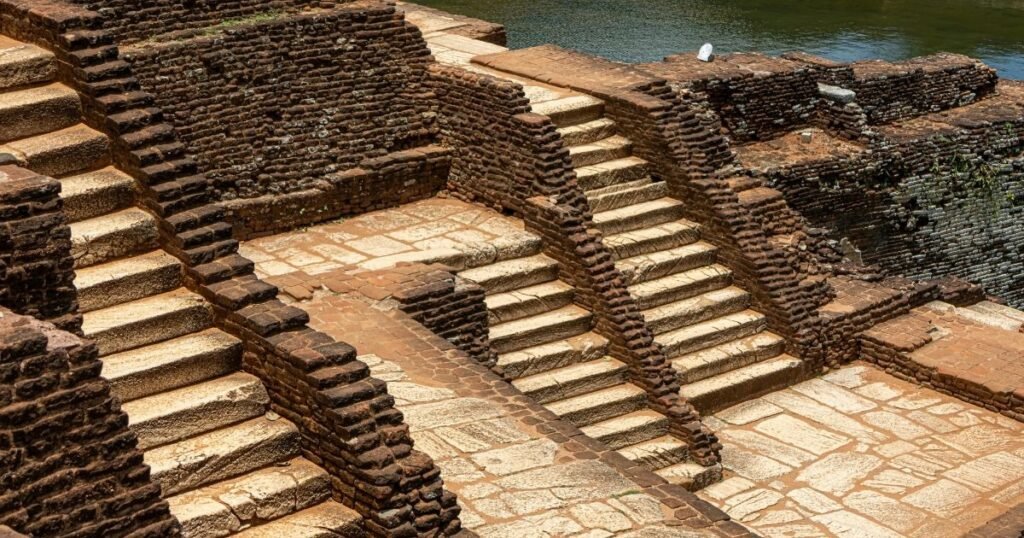
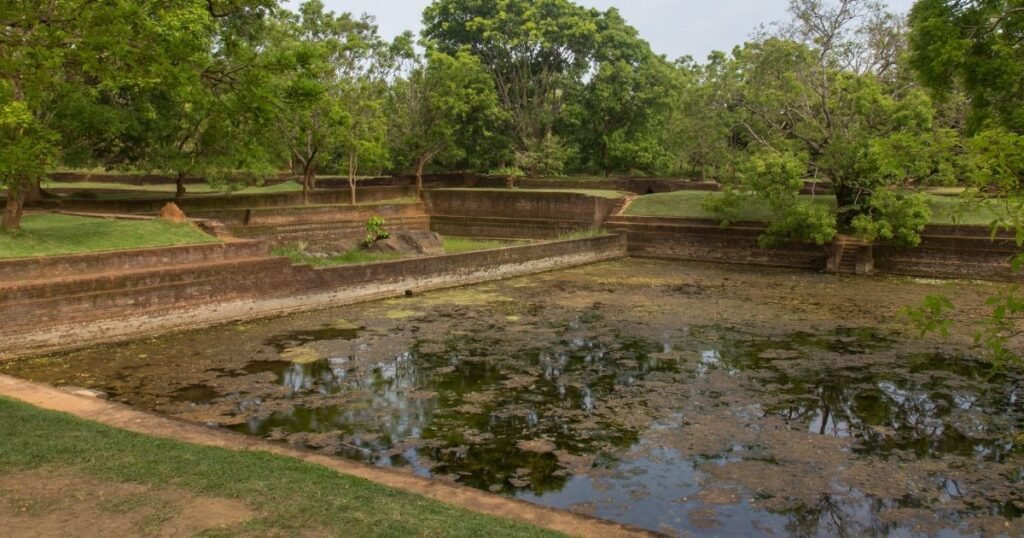
Your visit begins in the Water Gardens, where pools, channels, fountains and pathways were thoughtfully arranged around the natural landscape.
Although much of the original complex has disappeared, the layout still gives you a sense of its elegance and scale. Water was both functional and ornamental, forming an integral part of the architecture and creating a cool, refined setting around the base of the rock.
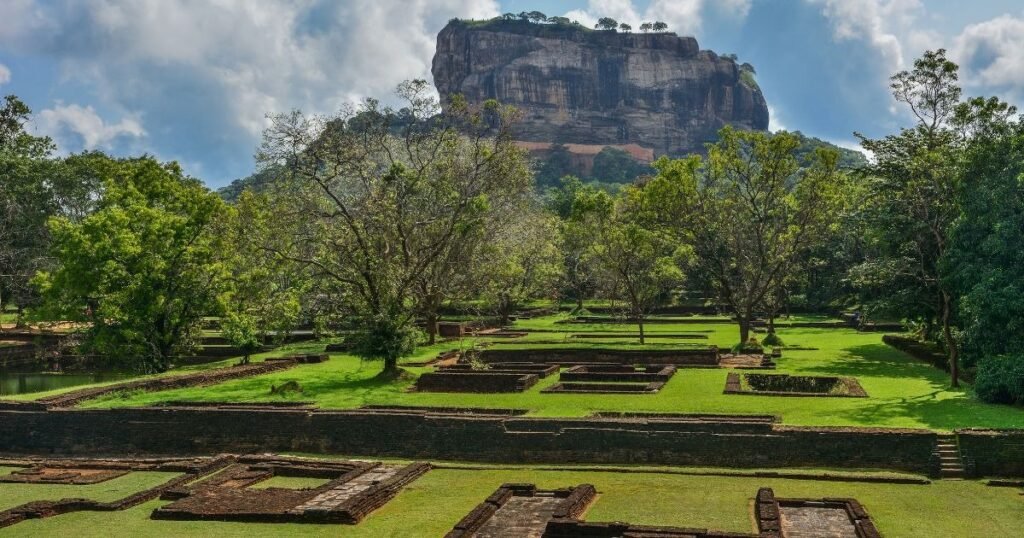
As you wander through the gardens, Sigiriya rises gradually into view. It’s a striking introduction to the extraordinary landscape ahead.
Continue Through the Boulder Gardens
Beyond the Water Gardens, the atmosphere changes. Carefully ordered pathways give way to enormous natural boulders, caves, and ancient structures tucked between the rocks.
The builders worked with the landscape rather than against it. Natural formations became part of the architecture, while stairways and pathways were designed around them.
It’s here that Sigiriya begins to feel less like a formal royal garden and more like an ancient fortress shaped directly from the rock.
Stop for the Sigiriya Frescoes
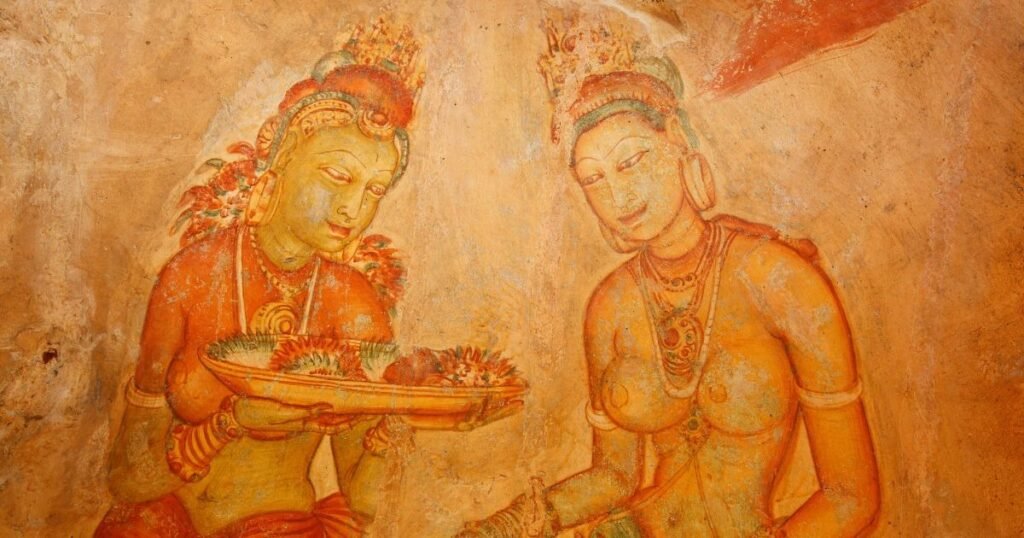
Further up the rock, a sheltered gallery houses the famous Sigiriya Frescoes. The paintings depict richly adorned female figures, traditionally known as the Sigiriya Maidens.
Their exact identities remain uncertain. Some interpretations suggest celestial beings, while others believe they may represent women from the royal court.
What remains is remarkably detailed. Jewellery, elaborate hairstyles and delicate expressions can still be seen in the surviving paintings, offering a glimpse into the artistic sophistication of the period.
Photography is restricted in this section, so take a moment to simply look. After the gardens and rugged boulders below, the delicacy of the frescoes feels like an unexpected change of pace.
Read the Ancient Graffiti on the Mirror Wall
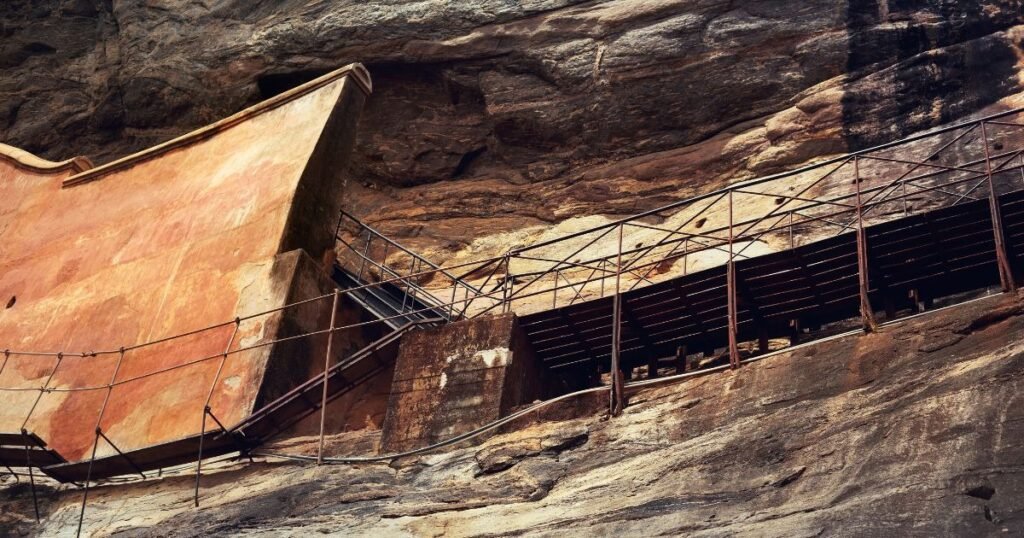
Just below the frescoes is the Mirror Wall, originally coated in highly polished plaster to create a reflective surface.
Its later history is particularly fascinating. Centuries after Sigiriya’s royal period, visitors began leaving poems, observations and personal impressions on the wall. More than 1,800 inscriptions have been documented, dating from around the 6th to 14th centuries. Some describe the frescoes, while others capture the emotions of people who stood here centuries ago.
Among the remains of a royal complex, these ancient inscriptions offer something wonderfully intimate. They remind you that Sigiriya has been inspiring visitors for far longer than modern tourism has existed.
Reach the Lion’s Paw Terrace
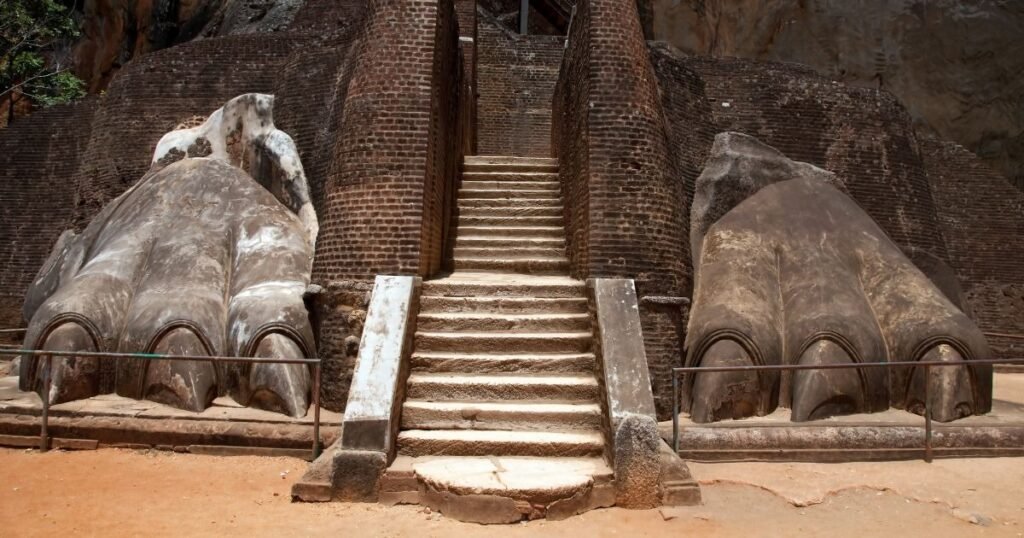
The route continues towards the Lion’s Paw Terrace, where two enormous stone paws mark what remains of the entrance to the summit.
The original gateway was designed as a giant lion. Visitors would have passed between its paws and climbed through its open mouth towards the palace above. Only the paws survive today, but they still convey the scale and grandeur of the original entrance.
From here, you can see the final section of the climb. The stairs become steeper and more exposed as they follow the rock face, so this is a good place to slow down and take your time.
Take in the Summit Views
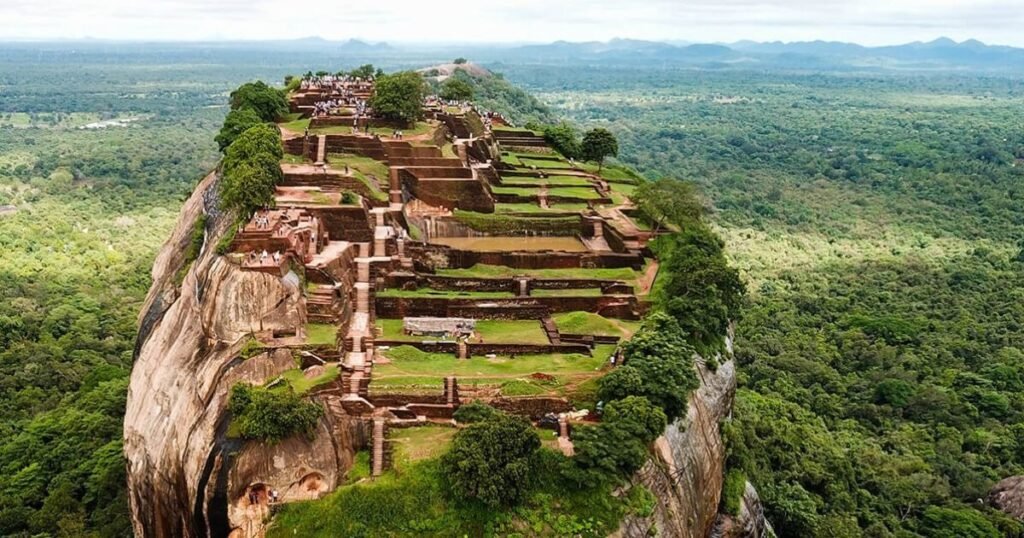
Then, almost suddenly, you emerge onto the summit. The remains of the palace are spread across the top of the rock, with foundations, terraces, cisterns and other structures revealing the scale of the royal complex.
But it’s the view that stays with you. From nearly 200 metres above the surrounding landscape, forests, plains and reservoirs extend towards the horizon. Looking back towards the gardens, you can finally appreciate the entire design of Sigiriya: the palace above, the rock at its centre and the carefully planned landscape unfolding below.
Combining Sigiriya and Pidurangala
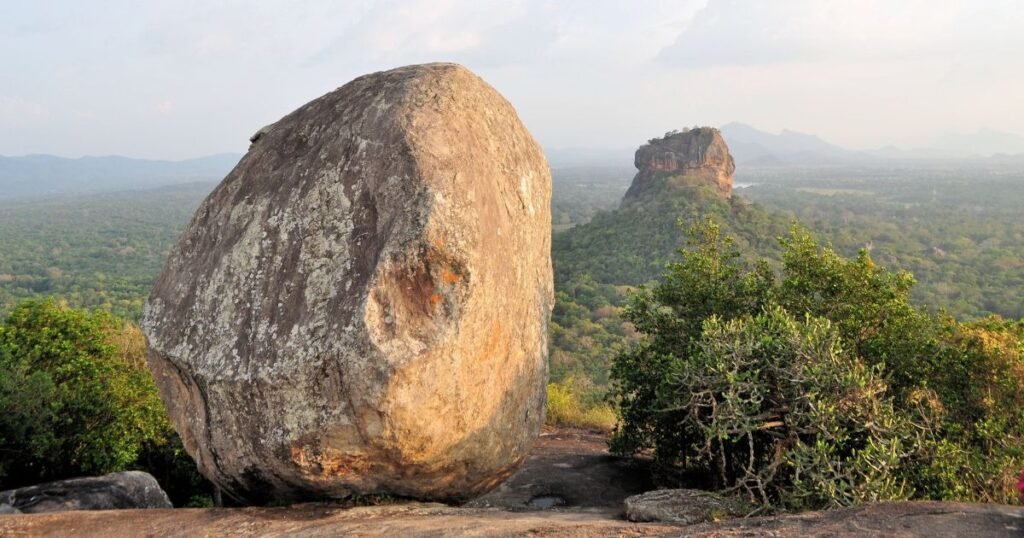
If you have the time and energy, Sigiriya and Pidurangala can easily be experienced together, although they offer very different perspectives.
Sigiriya takes you into the history of the ancient royal complex, from its gardens and frescoes to the Lion’s Paw and summit ruins. Pidurangala, by contrast, is primarily about the hike and the view back towards Sigiriya.
A popular way to combine the two is to climb Pidurangala for sunrise and visit Sigiriya afterwards. It makes for a rewarding but active day, so it’s best suited to travelers who are comfortable with plenty of walking and an early start.
If you’d rather savour the experience at a slower pace, Sigiriya alone deserves several hours. There’s enough to see without adding another climb to the day.
Beyond Sigiriya: Experiences in the Cultural Triangle
One of the pleasures of staying in the Cultural Triangle is how easily Sigiriya can be paired with other experiences.
Just a short drive away, Dambulla Cave Temple offers a completely different atmosphere. Ancient cave shrines are filled with Buddhist murals and statues, creating one of Sri Lanka’s most remarkable religious sites.
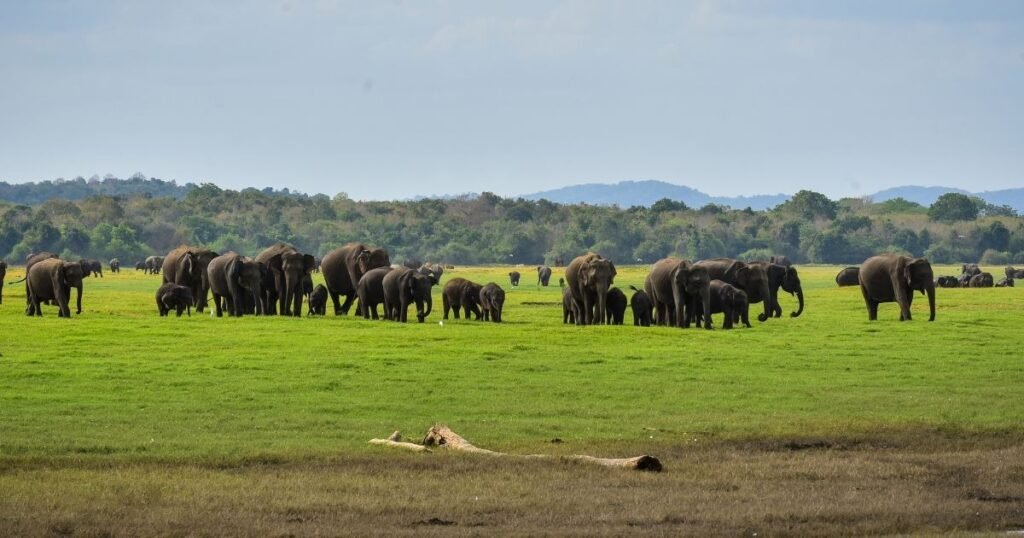
For wildlife, Minneriya National Park makes a natural addition. The park is particularly famous for its large elephant gatherings, which are generally most prominent between July and October.
If you prefer somewhere quieter, Ritigala Forest Monastery offers the chance to explore ancient ruins surrounded by dense forest. Its secluded setting feels worlds away from the busier archaeological sites.
Further east, Polonnaruwa reveals the remains of Sri Lanka’s medieval capital, with ancient temples, statues and monumental ruins spread across an expansive archaeological landscape.
You can also slow the pace with a more personal experience, whether that’s a Sri Lankan cooking class, village experience, countryside cycling excursion or sunrise hot-air balloon flight over the Cultural Triangle.
Together, these experiences allow you to move effortlessly between history, wildlife, food and countryside, while enjoying a more complete sense of this remarkable region.
A Refined Base for Exploring Sigiriya
Staying in the Cultural Triangle gives you the freedom to experience Sigiriya without turning it into a rushed stop between destinations.
Rather than traveling from Colombo and trying to fit everything into one day, you can arrive early, explore at your own pace, and retreat to your accommodation when the heat of the afternoon sets in.
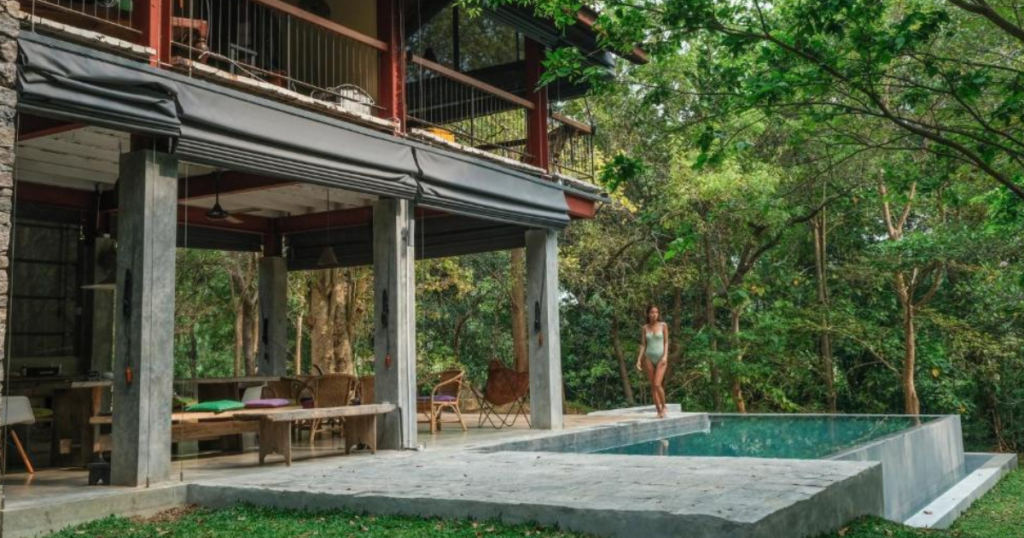
At The Serendipity Collection, our River House in Dambulla offers a private three-bedroom stay for up to six guests. It provides an elegant and comfortable base for exploring Sigiriya, Dambulla and the wider Cultural Triangle, while giving you space to unwind between excursions.
Plan Your Sigiriya Tour with The Serendipity Experiences
Sigiriya rewards those who take their time. From the ancient gardens to the summit, every part of the experience reveals something different, culminating in sweeping views across the Cultural Triangle.
At The Serendipity Experiences, we can incorporate Sigiriya into a private Sri Lanka journey shaped around the way you want to travel, with elegant accommodation, private transfers, a knowledgeable local guide, wildlife encounters, and time to discover the quieter corners of the Cultural Triangle.
Ready to experience Sigiriya your way? Contact us to begin planning your private Sri Lanka journey.
Frequently Asked Questions
The current entrance fee for foreign visitors is USD 35, or LKR 11,865 based on the Central Cultural Fund’s current listed exchange rate. A half ticket costs USD 20 (LKR 6,780), with reduced rates available for eligible visitors, including tourists from SAARC countries.
The Central Cultural Fund currently operates heritage-site ticket counters from 7:00 AM to 5:00 PM, and tickets are valid for a single entry on the relevant day.
Prices can change, so it’s worth checking the latest information from the Central Cultural Fund before your visit.
Allow around 2.5 to 3 hours for the full experience. This gives you enough time to explore the gardens, stop at the frescoes and Mirror Wall, climb past the Lion’s Paw, spend time at the summit, and make your way back down without rushing.
There are roughly 1,200 steps, although they’re spread throughout the route rather than forming one continuous staircase. The climb begins gently before becoming progressively steeper towards the summit.
Sigiriya is moderately challenging, but most reasonably active travelers should be able to manage it. You don’t need any climbing experience, although the number of steps, tropical heat and exposed sections near the summit can make the climb demanding.
The final stairways are attached directly to the rock face, which can feel intimidating if you’re uncomfortable with heights. Take your time and use the handrails where available.
Comfortable shoes with good grip are essential. If you’re visiting during a particularly hot period, an early start will also make the climb considerably more comfortable.
Yes. Sigiriya can be a wonderful experience for families, particularly with older children who enjoy walking, history and exploring.
Younger children may find the number of steps tiring, while the exposed sections near the summit require closer supervision. An early start is ideal for families, as the climb is generally much more comfortable before the midday heat sets in.
For the most comfortable experience, arrive around 7:00 AM when the site opens. Much of the climb is exposed, and the heat becomes stronger as the morning progresses.
An early start means you can reach the upper sections before the temperature rises significantly. The morning light is also softer, making the views across the Cultural Triangle particularly beautiful.
Sigiriya can be visited throughout the year. December to April is generally a favorable period for sightseeing, while October and November can bring more unsettled weather.
Rain doesn’t necessarily mean you have to cancel your visit, but wet stone and stairways can make the climb more difficult. If your dates are flexible, check the forecast before choosing your day.
Comfort matters. Wear lightweight, breathable clothing and comfortable shoes with good grip. You’ll also want to bring water, sunscreen, sunglasses, and a hat.
A small backpack is easier to manage than a large daypack, particularly once you reach the steeper sections.
If you’re combining Sigiriya with Dambulla Cave Temple or another religious site, bring clothing that covers your shoulders and knees.